
In testicular cancer, self-examination and awareness can save lives.
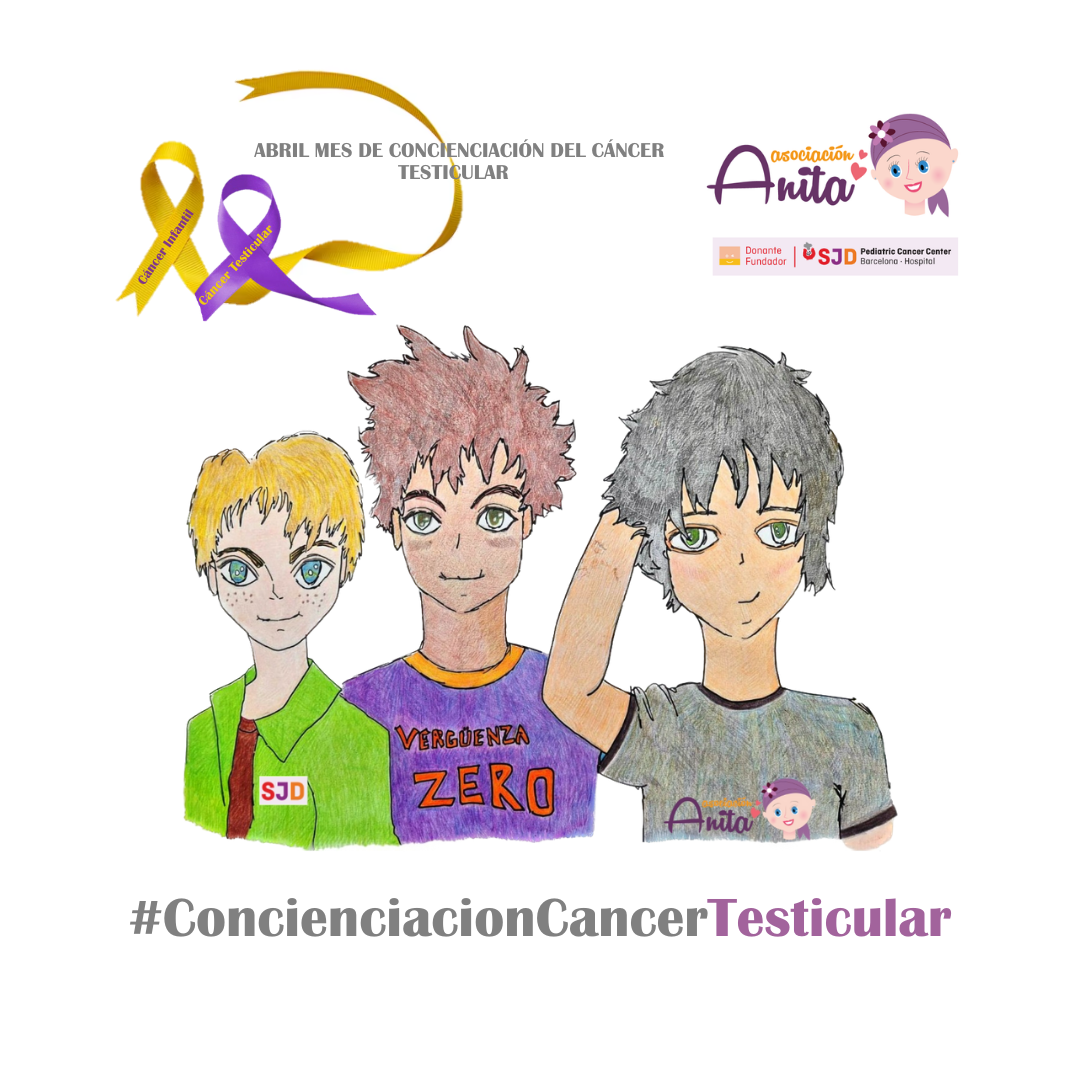
Once again this year, Asociación Anita joins the World Testicular Cancer Awareness Month campaign, held every April, with the aim of raising awareness and informing the public about this disease. It does so with a new interview that joins those conducted last year, specifically focused on testicular cancer.

Dr. Juan Pablo Muñoz interviewed by Dr. Raquel Tulleuda
“Because the patient isn’t in pain, feels embarrassed, isn’t quite sure of what’s going on, and is afraid. So, this is one of the main problems: there is a delay in seeing a doctor.” This reality and many other facts are shared with us by specialist physician Juan Pablo Muñoz, a pediatric oncologist at the PCCB at Sant Joan de Déu Hospital, alongside our friend, gynecologist and sexologist Raquel Tulleuda, in this new and interesting interview on the topic, which you can now find on our YouTube channel.
One of the core missions of Asociación Benéfica Anita is research into childhood cancer, specifically germ cell tumors, which are most common among children aged 0 to 4 and in adolescents and older.
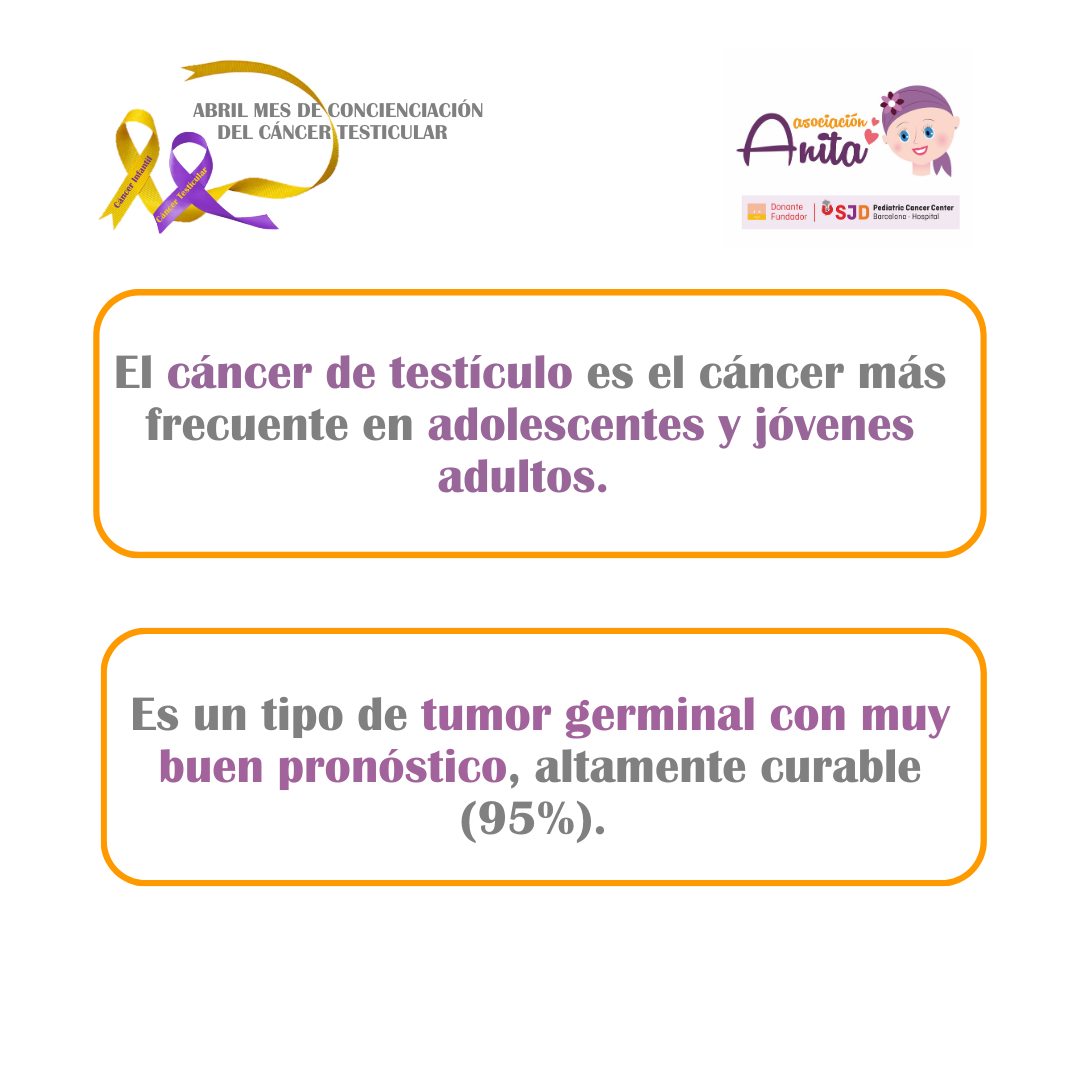
Among the various types of germ cell tumors (those that form during the development of the gonads, which are the ovaries and testicles), we find testicular cancer, which is the most common solid tumor in teenagers boys.
The prognosis for a cure is very good in all cases (80%), but if it is detected early, before metastasis has occurred, the prognosis is even better, with a cure rate of nearly 100%. Furthermore, detecting it while it is still localized can limit treatment to surgery on the affected testicle and subsequent patient follow-up, avoiding the need for chemotherapy—and the toxicity it entails—in many cases.
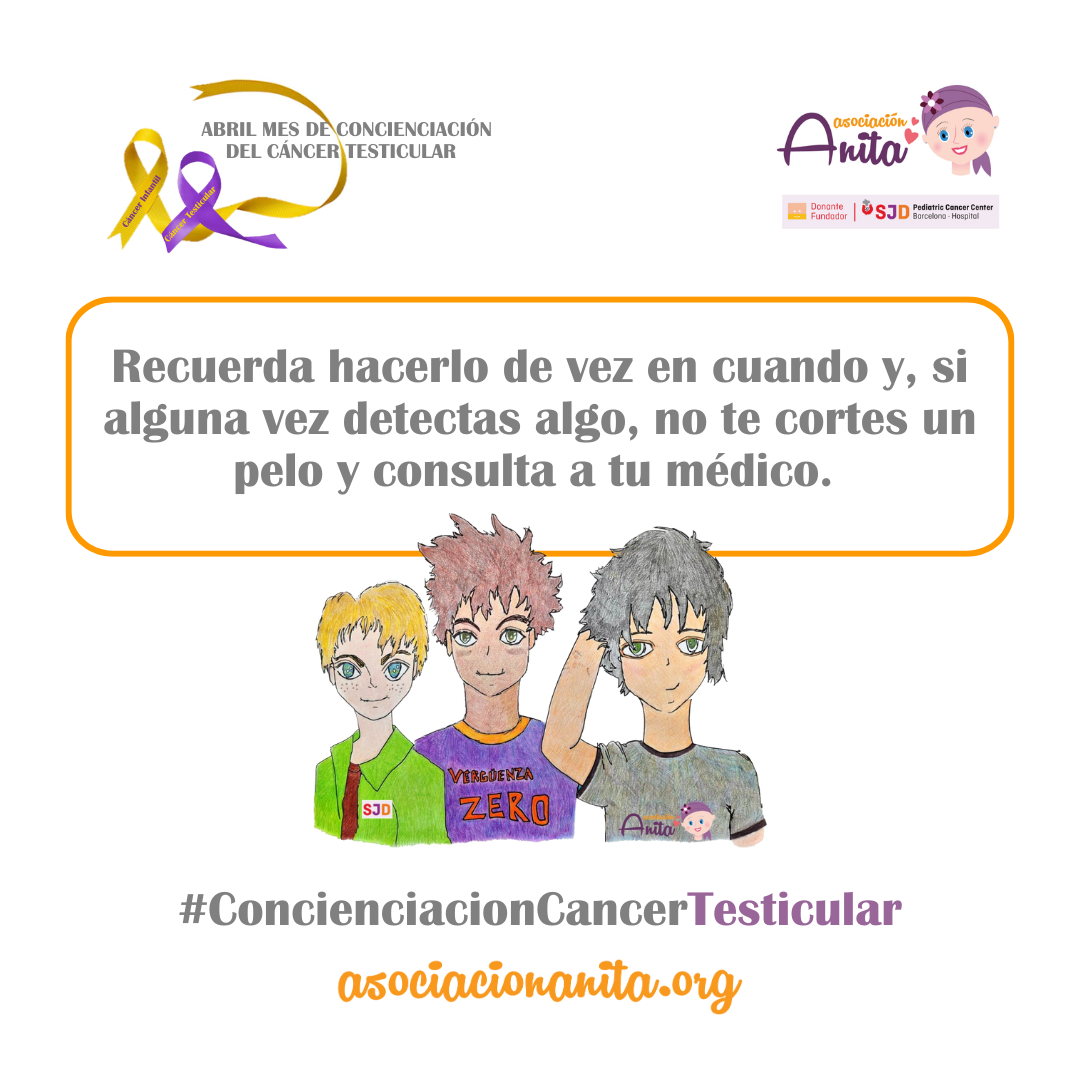
Being aware of this practice and talking to your children about testicular self-examination in a natural way will help them feel comfortable discussing any changes in the texture or size of one of their testicles, thereby promoting early detection.
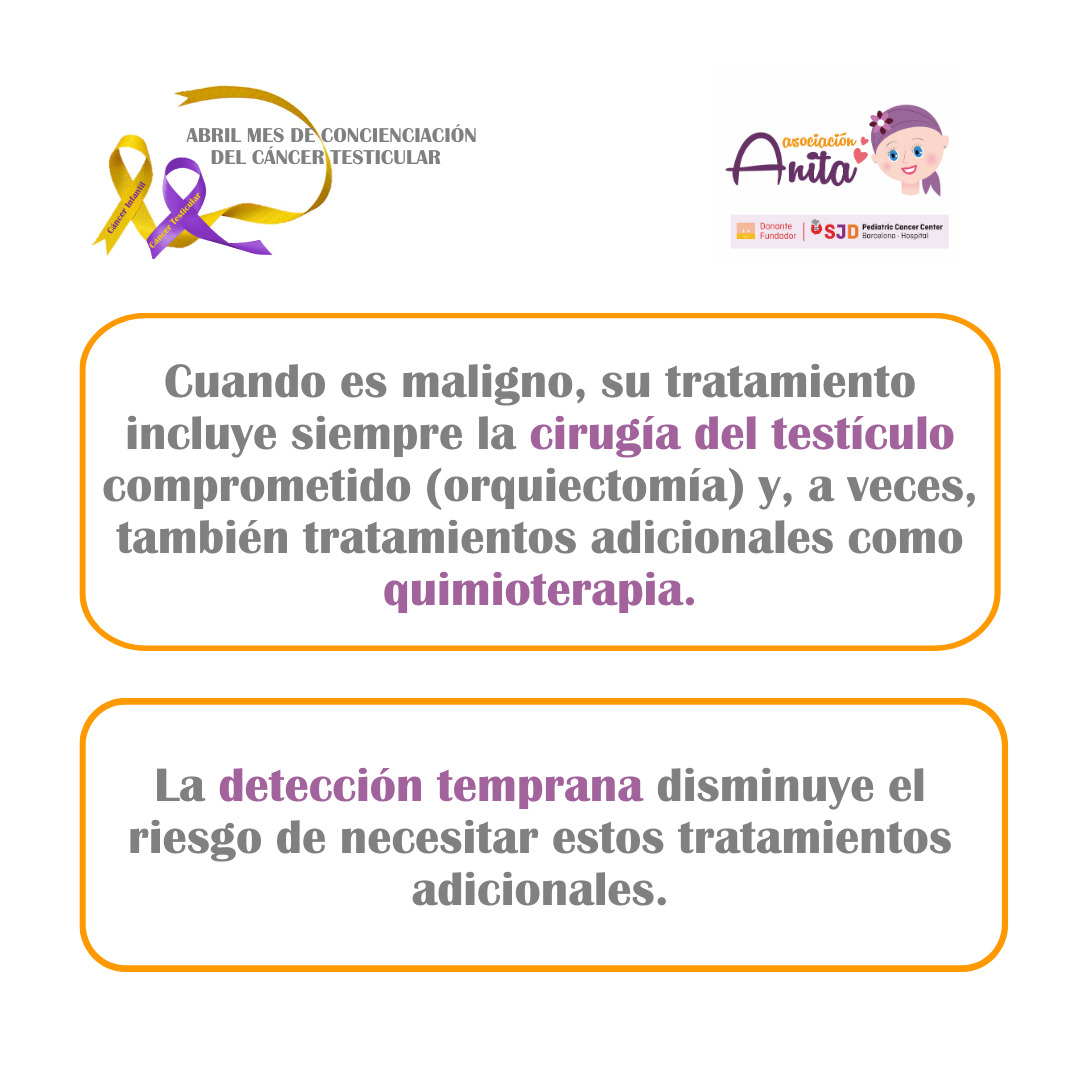
But there are also situations in which the tumor has spread and chemotherapy is indeed necessary. Especially in these cases, the prospective, nationwide study of the microRNA biomarker—funded by Asociación Anita the Molecular Oncology Laboratory of the Sant Joan de Déu Pediatric Cancer Center (SJDPCCB)—could play a key role in defining more personalized and effective treatments for each patient in the future. This study is currently underway to validate whether this biomarker is more sensitive and specific for germ cell tumors than existing classic markers, potentially benefiting not only the personalization and efficacy of treatment but also enabling a more rapid diagnosis.
Don’t miss the interview, and help us spread the word about the importance of self-examination and seeking immediate medical attention if you have any concerns, because early detection can not only save lives but also help avoid the side effects of chemotherapy and significantly improve the quality of life for teenagers diagnosed with testicular cancer.